


David Davy Wragg
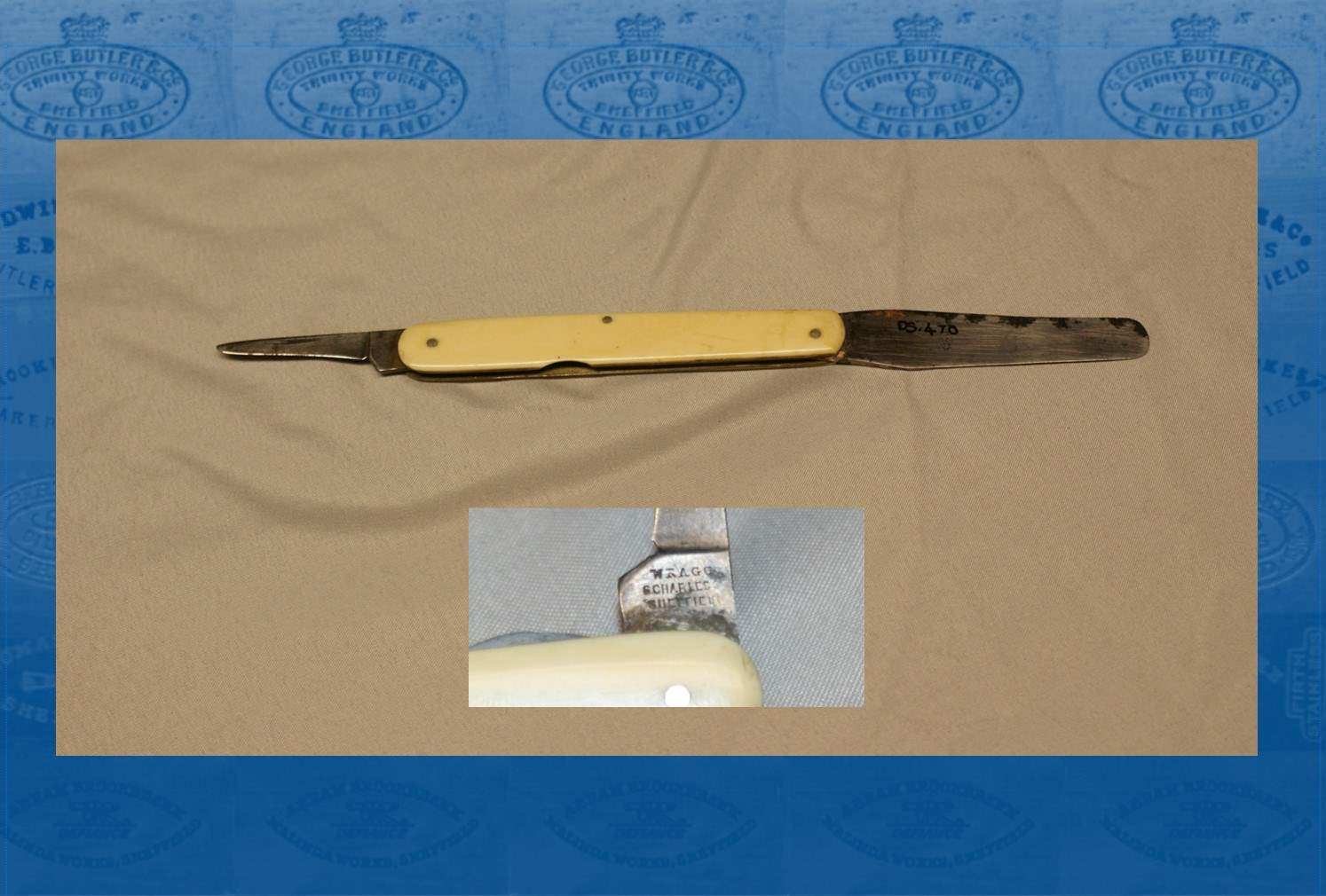
© Ken Hawley Collection Trust - DS.470
David Davy Wragg (1864-1958) was the son of Joseph Wragg, a spring-knife manufacturer. In the Census (1881), David Wragg was living with his parents at Hanover Street and working ‘in cutlery warehouse’. In 1887, he began business as a cutlery manufacturer, though his capital was only £25 in savings. His address was 70 Charles Street, from where he advertised pen, pocket, and sportsman’s knives, razors, safety razors, and scissors. This cutlery, which would have been factored, was stamped ‘WRAGG/70 Charles Street’. In 1912, David D. Wragg became a partner in Bailey’s Patents Ltd, which was established with a capital of £800 to exploit patents relating to the hardening of chisels. It was a sign that Wragg’s business was struggling. In 1913, he sold his cutlery tools and effects at Charles Street. In the following year, Wragg and Bailey’s were bankrupt. Wragg blamed German competition in safety razors, strikes, and a lack of capital (Nottingham Daily Express, 21 November 1914). After the War, he began trading as a spoon and fork manufacturer at Union Street. This involved Wragg illegally obtaining credit as an undischarged bankrupt – an offence which led in 1921 to a four-months spell behind bars. By then, he had left his wife, Susan Cecily née Walker (1878-1963), and their three children. She sued for desertion and maintenance (Sheffield Daily Telegraph, 21 August 1920). His subsequent life is sketchy. He died in 1958 at Firvale Infirmary and was buried at Burngreave.
The knife shown here was an artist’s knife, with the inscription: ‘Via Gellia Colour Co’. It has a well-worn pen blade and a palette knife.