


George Clark (Sheffield) Ltd

© Ken Hawley Collection Trust - K.0208
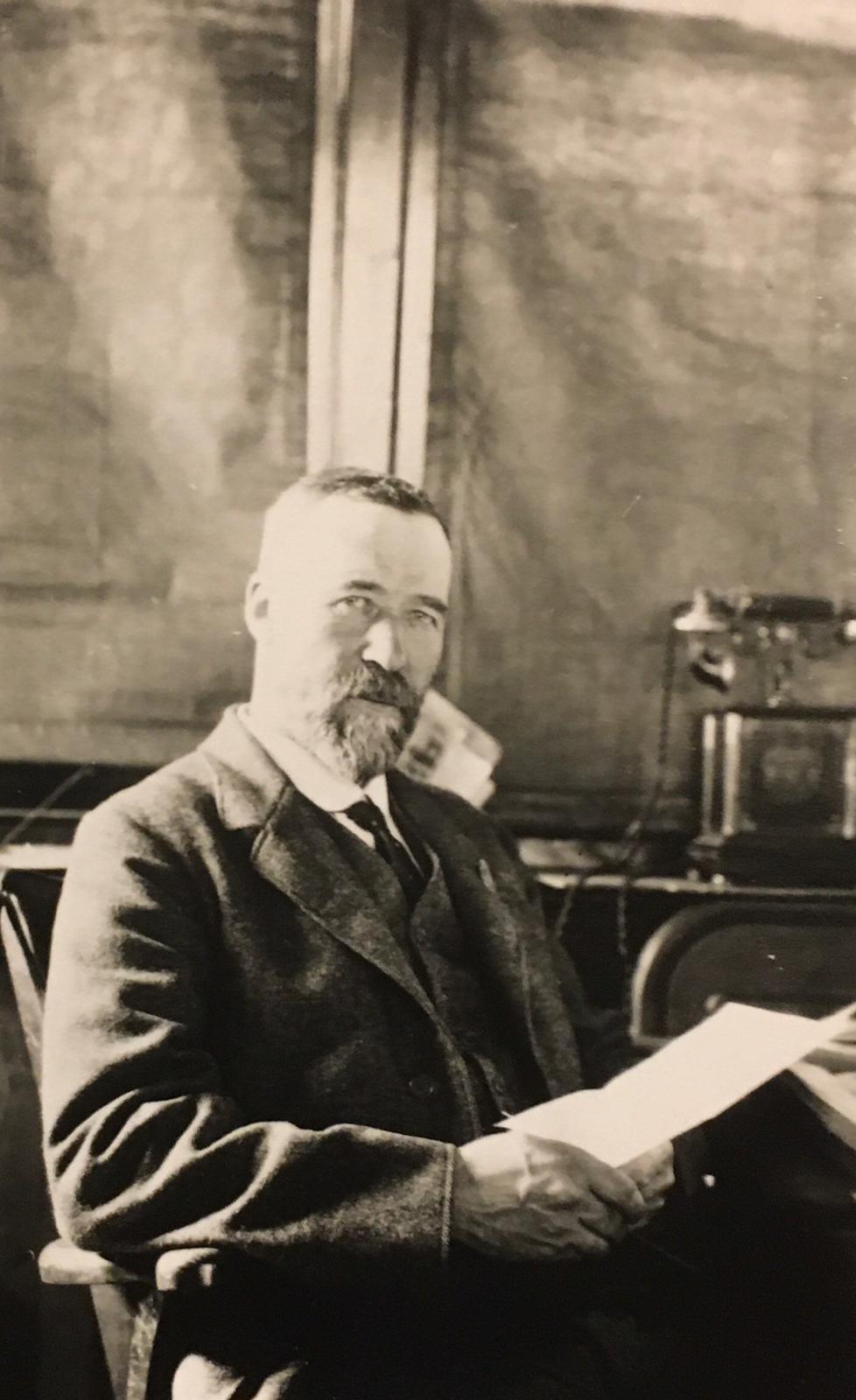
George Clark was born in Newton on Trent in Lincolnshire in April 1857, a middle son of a farm labourer.
Before he was 20, he had left the hard-working life of his childhood and was instead living and working in Sheffield. At 21, he was married to Sarah, and by 1896 he was a father to their 5 children.
George lived in some large houses in Sheffield - a town house near Weston Park, through to a mansion called Hill Turrets, as well as owning a farm in Kirton Lindsey in Lincolnshire called Mount Pleasant.
His company had rolling mills near Glebe Works on Penistone Road (most recently occupied by Namsbury Engineering, but currently earmarked for redevelopment) as well as a facility towards Oughtibridge on Middlewood Road.
He had started out in the steel industry selling ice skate blades and moved onto the manufacture of shovel plates. He had been made bankrupt in the late 1800’s due to the financial climate, but - unlike many of his competitors - had paid back every penny, rather than the few pence in the pound often seen.
He was a Justice of the Peace around the turn of the 20th Century and was asked by Lloyd George to represent one of the Sheffield boroughs in the Houses of Parliament. He declined this due to the concern that the bankruptcy would deter voters and so never made it to parliament.
He was innovative all the way through - he designed and built furnaces that would burn much cleaner; he made (and sold!) coal gas when town gas was the only other option, and the prices were very high.
He - as legend would have it - owned the first Rolls-Royce in Sheffield.
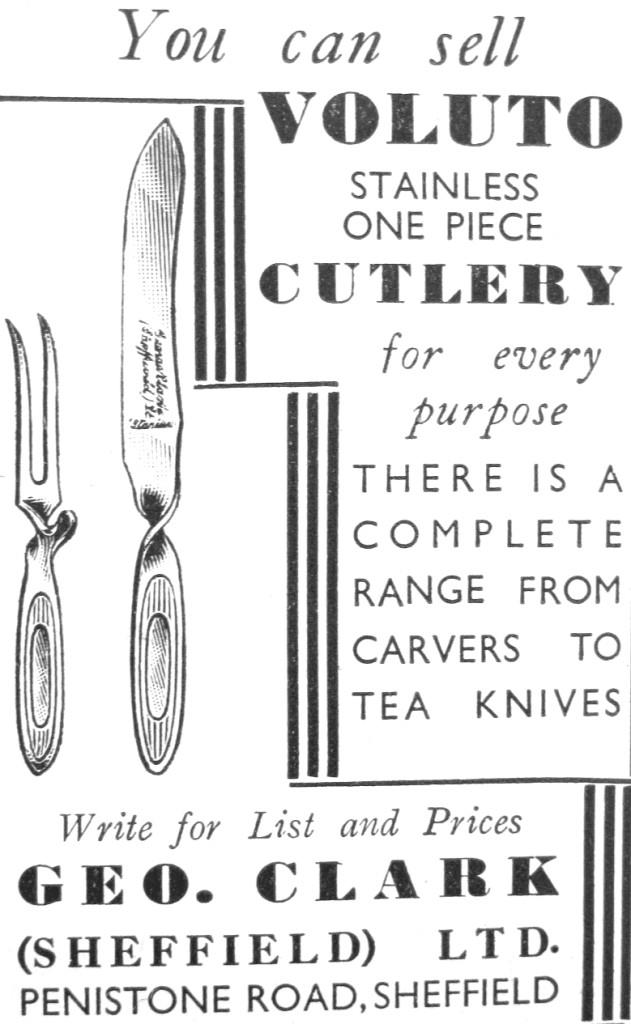
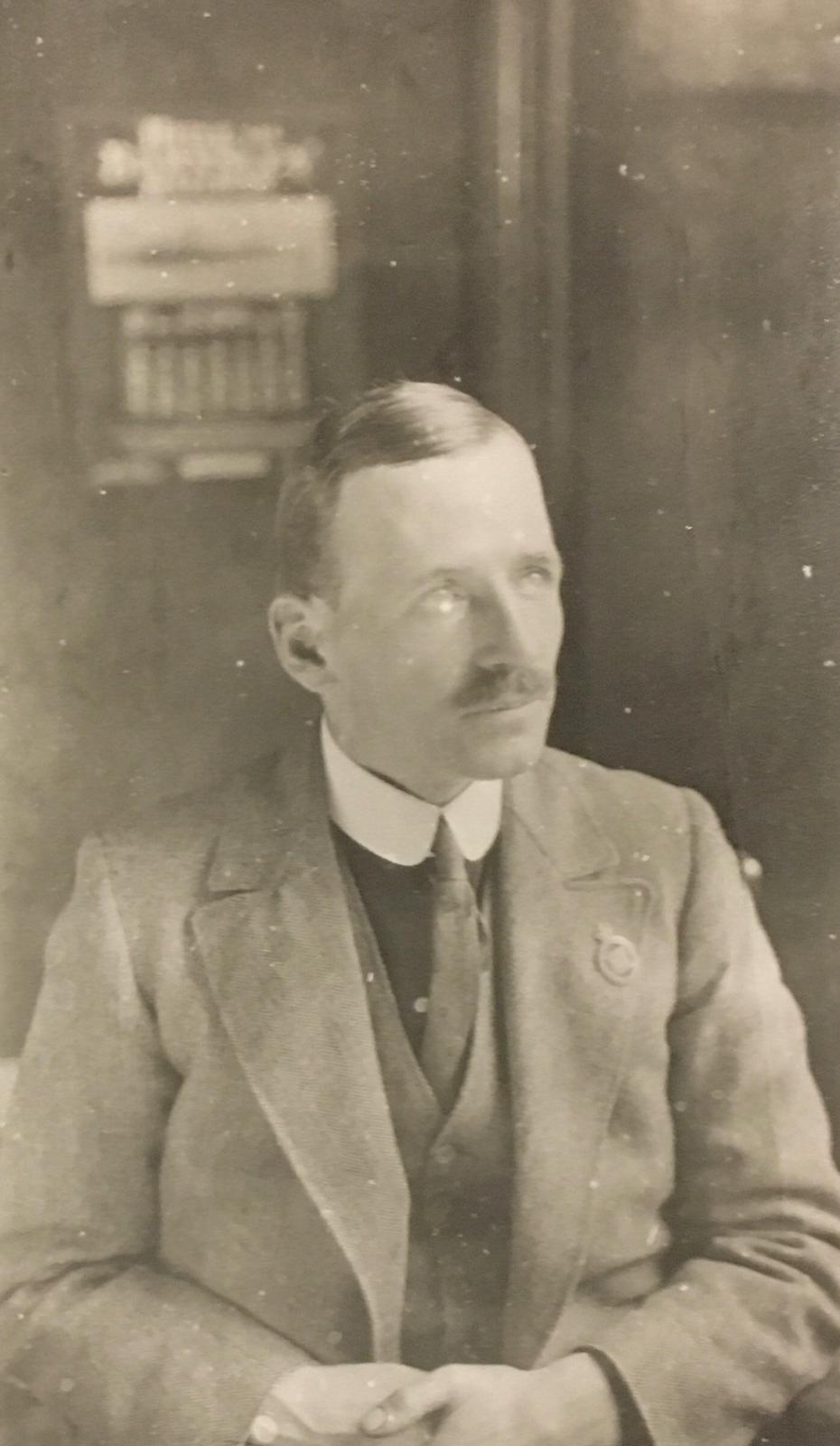
As he grew older, his younger son - Edward Douglas Wainwright Clark (1885-1959) (known as Douglas), - came into the business and gradually took over the day to day running. The Voluto knife (introduced in 1933) was his brainchild and has a ‘volute’ (a twist) to demarcate the handle from the blade. His father had retired by then and Douglas was managing director.
The benefits of the knife were the single piece construction, which led to much improved hygiene. An attempt to sell to the armed services was thwarted when two of the services agreed to purchase, but the third refused - the plan was to get all services buying from the same supplier and so George Clark’s innovative knives didn’t make it into the second world war. Unfortunately, although many different knives were produced, the press was destroyed in the second world war when the workshops were bombed and the knives were never made again. The patents were sold to a South African company but the buyers never made them.
George died in 1936; soil from the farm he owned in Lincolnshire was scattered on his grave. Part of him lives on in Kelham Island Museum - the Crossley Gas Engine near the museum shop was rescued from his factory and refurbished for the museum.
Douglas Clark died at his home, Overhill, Townhead Road, Dore, on 3 December 1959, aged 74. The funeral was at Christ Church, Dore, followed by cremation. He left £39,463.
The Voluto knives were made in many different shapes and sizes, from butter knives through to fish knives, dessert knives and up to the largest - a carving knife. Interestingly, the designs changed throughout the 1930’s - there are at least 2 different handle designs, and 2 different makers mark stamps; these seem to have been interchangeable, as there are examples of both handle designs with both stamp versions.
From Ben Kentzer, Great-Great Grandson of George Clark, with additional information from Geoffrey Tweedale