Swann-Morton Ltd

Swann Morton Ltd, Penn works; Picture Sheffield (a04413), © SCC

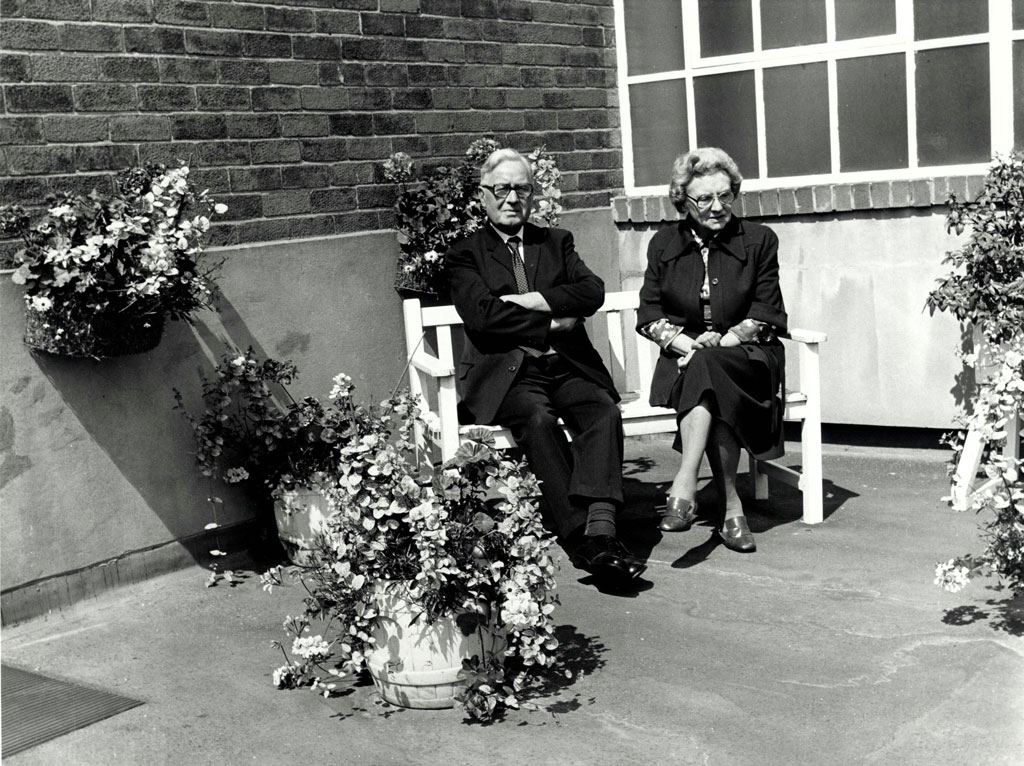
Walter Robinson Swann (1900-1980) was born in Sheffield, the only son of Walter Morton Swann (1875-1906) and Almena née Robinson. The Swann family was from March, Cambridgeshire. Walter’s father, a mechanical engineer, died from tuberculosis after moving to Sheffield. In 1917, Walter was apprenticed as an engineer and became a craftsman fitter for a Sheffield safety razor blade maker. By 1924, he had become, in his own words, a ‘thorough-going revolutionary Socialist’ and trade union activist (Swann-Morton, The First Fifty Years, 1982). Faced with dismissal, he moved to another razor blade manufacturer, and then decided to launch his own business. He took with him a small band of co-workers from his last job.
In 1932, W. R. Swann & Co Ltd was registered as a private company. Capital was only £150, which reflected the size of the firm’s cramped Woodland Street factory. No directors were listed, but the subscribers were Walter R. Swann and James Alfred Morton (1903-1968). The latter was a metallurgist and son of James Alfred Morton Sen. (1873-1952), who was a spoon and fork stamper at a silversmiths. The company secretary was Betty (Betsy) Margaret Fenton, whom Alfred Morton Jun. married in 1934. Morton received scant attention in later historical accounts published by the company, but according to a descendant he provided sales expertise, besides metallurgical knowledge (information from John Morton). For engineering skills, the firm also relied upon fitter Harry Sievewright (1900-1968), who kept the grinding machines running. Crucial, too, was Doris Fairweather (1906-1984), whom Swann had met in the 1920s and was supervisor of the girls and women on those machines.
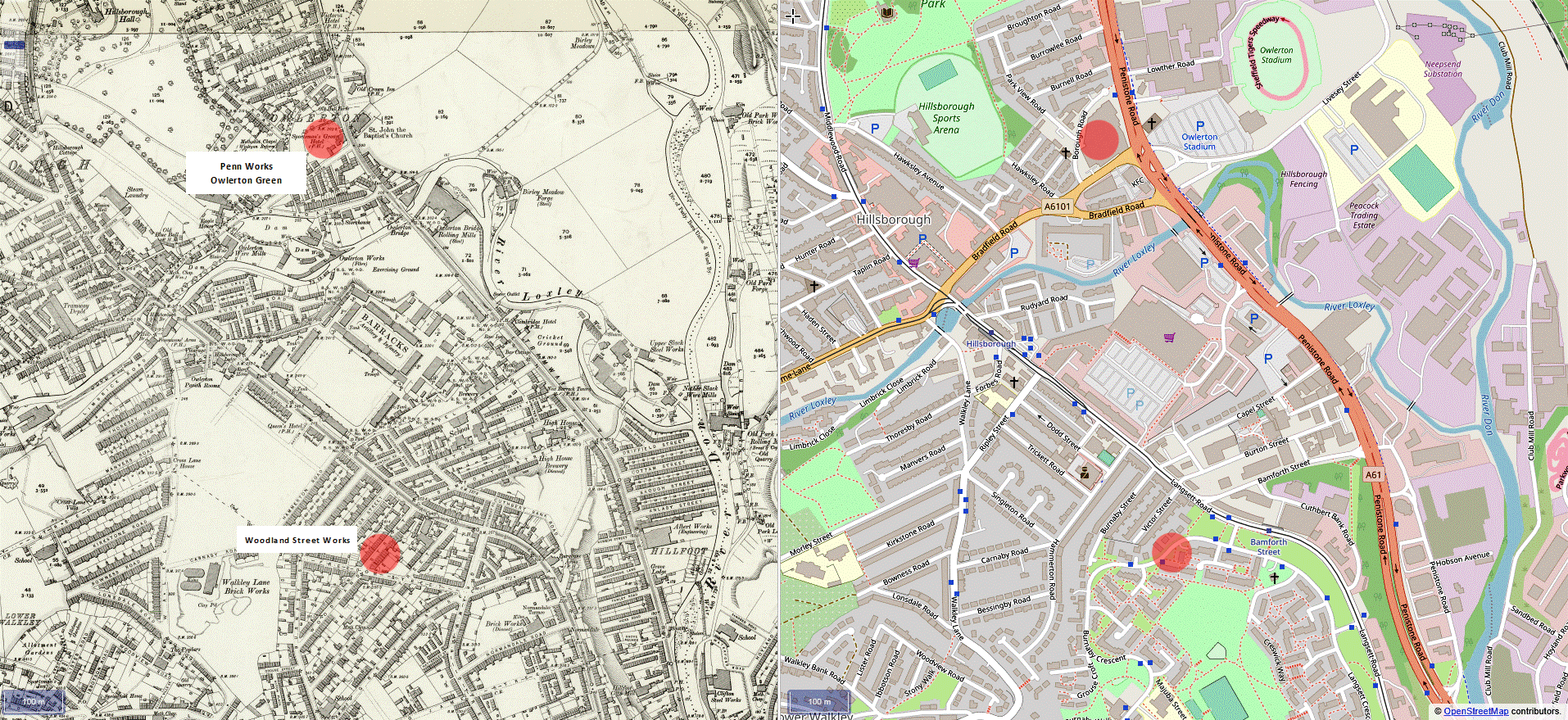
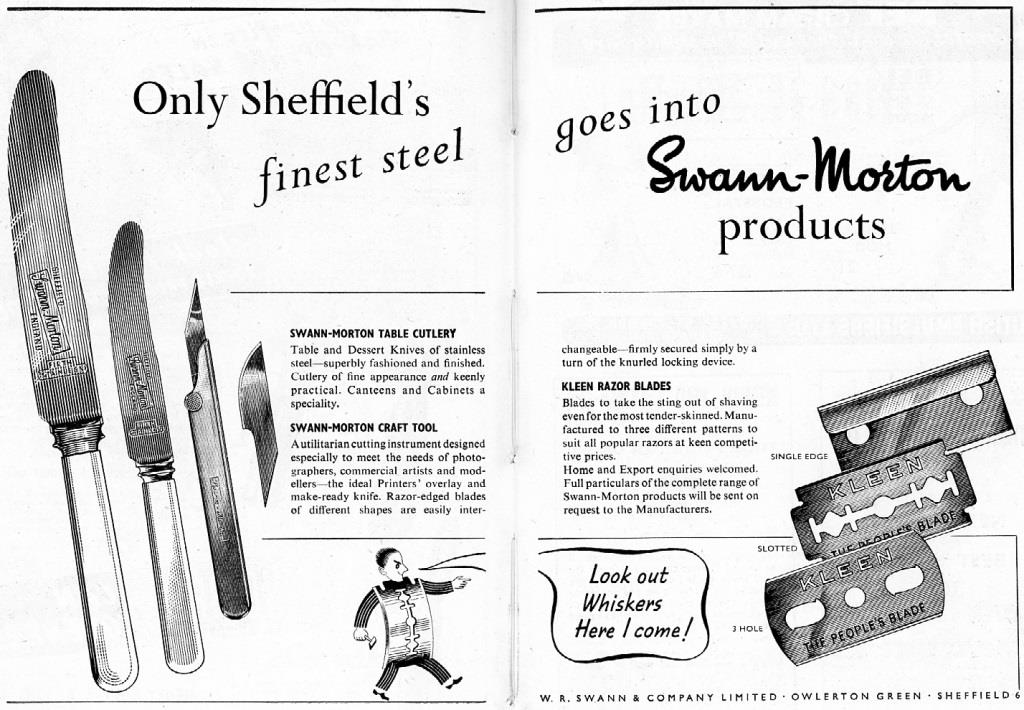
The brief company prospectus stated that the new firm was a cutlers and merchants of all kinds of cutlery, razors, razor blades, scissors, and agricultural implements (Sheffield Daily Telegraph, 29 July 1932). However, it was essentially established to sell safety razor blades. Stamped ‘KLEEN’, they were well-advertised and cost a penny. In 1935, the company was approached to make the handles for replacement surgical scalpel blades. Swann’s expanded and in the same year moved to a larger factory in Bradfield Road.
Swann had married Gladys Fearnley in 1922, but eight years later the marriage was annulled on the grounds that it had not been consummated. Swann never re-married, but he found a kindred spirit in Miss Fairweather (who married Clifford Thorp, a cabinet maker, in 1936). She shared his ideals and together they began implementing Swann’s vision of a factory run on socialist lines in which the ‘claims of individuals producing in an industry come first’. The company claimed to be the first to introduce the 40-hour week; it also paid bonuses to workers. Work routines remained strict, however, for the core female employees. Fairweather had a reputation as a disciplinarian, which suited. Swann's conventional views on women. He once stressed that proper discipline was absolutely essential in the factory, ‘because the girls in most cases do not know too much about the job, and are inclined to be careless’ (Leeds Mercury, 7 December 1934).
In the Register of Engalnd & Wales (1939), Swann was enumerated as ‘chairman and technical director of a surgical scalpel and razor blade manufacturer’; Morton as a ‘working manager director safety razor blades’; and Thorp (Fairweather) as ‘superintendent of production … surgical instrument and safety razor’. Morton left the company after the War and was chairman of a small foundry at Chesterfield, when he died in a car crash on 9 May 1968, aged 64. Co-directors Swann and Fairweather (who continued to use her maiden name) oversaw the post-war expansion of the business, which was re-incorporated in 1948. The demand for surgical blades had boomed during the war and razor blade manufacture was soon abandoned. In the early 1950s the firm advertised table cutlery (though there is no evidence so far that any knives were sold). Swann’s was based at Penn Works, Owlerton Green. Despite tax problems after the war, the company thrived, with a workforce of about a hundred. By 1957, the firm was producing 38 million surgical blades each year.
In 1961, Swann-Morton Ltd was incorporated under the umbrella of W. R. Swann & Co Ltd (which was now a holding company). According to Swann, he wanted a more stylish brand name and settled on the surname of his grandmother, Mary Elizabeth Morton (First Fifty Years, 1982; ‘50th Anniversary’, Quality July/August 1982). In 1961, he established orchards in the Wisbech area, partly to supply workers with fruit. In the 1960s, a new scalpel factory was completed, using the latest cobalt irradiation methods to sterilize products. In 1964, Swann and Fairweather – who both lacked direct descendants – relinquished control in favour of a trust, which gave a 50 per cent share to the employees and the remainder to a charitable foundation.
Walter Swann died on 15 October 1980, leaving £196,372; Doris Thorp on 19 February 1984, leaving £182,811. The management had passed to Ernest Nicholson. The Economist, 12 April 2001, published a photograph of Swann and Fairweather as an ‘image of revolutionary socialism’. Yet, as the journal admitted, Swann-Morton did not fit its stereotype that socialism was bad for business. It told its readers that: ‘Amongst the clutter of retail warehouses and ramshackle small businesses that line Penistone Road in Sheffield, the premises of Swann-Morton stand out like a Rolls-Royce in a scrapyard’. Its staff of 280 supplied 95 per cent of the scalpels used in NHS. They worked a 35-hour week, had ten weeks holiday a year, and private health care
In 2003, Swann-Morton Ltd absorbed Jewel Blade Co. In 2006, new engineering and warehouse facilities – Cobb Works and Cygnet Works – were opened across the road from Penn Works. The company employed about 350 workers, with a capacity of 1.5 million surgical and craft blades each day (More Sheffield Memories, 2007). It later acquired two overseas subsidiaries: Swann-Morton/Sinner based at Peynier, France; and J. K. Surgical in Poznan, Poland. Its trade marks included ‘Swann-Morton’ and the ‘Ring Pattern Logo’.